

How Do You Take Great Photos on a Clearwater Boat Tour?
Last Updated: November 17, 2026
Quick Summary
To get great photos on a Clearwater boat tour, keep your shutter speed at 1/1000 second or faster, use burst mode with continuous autofocus, and brace with three points of contact on the rail. Pack a polarizing filter, lens hood, microfiber cloth and dry bag to fight salt spray and glare.
Wear your camera strap cross-body, never loose over the rail, to avoid losing gear to the Gulf.
Wipe salt film off your phone lens before boarding and enable the highest-resolution still mode.
Use a telephoto lens at 200mm or longer and track ahead of the dolphin, not at it.
For sunset, shoot around f/8 to f/11 at ISO 100 and keep shooting through civil twilight.
Pull down highlights and add restrained dehaze when editing, checking edges at 100 percent for halos.
Ready to shoot dolphins and sunsets?
Join our Clearwater boat tours for dolphin sightings and Gulf sunsets worth capturing.
Table of Contents
Camera Gear for Boat Tours: What to Bring and How to Protect It
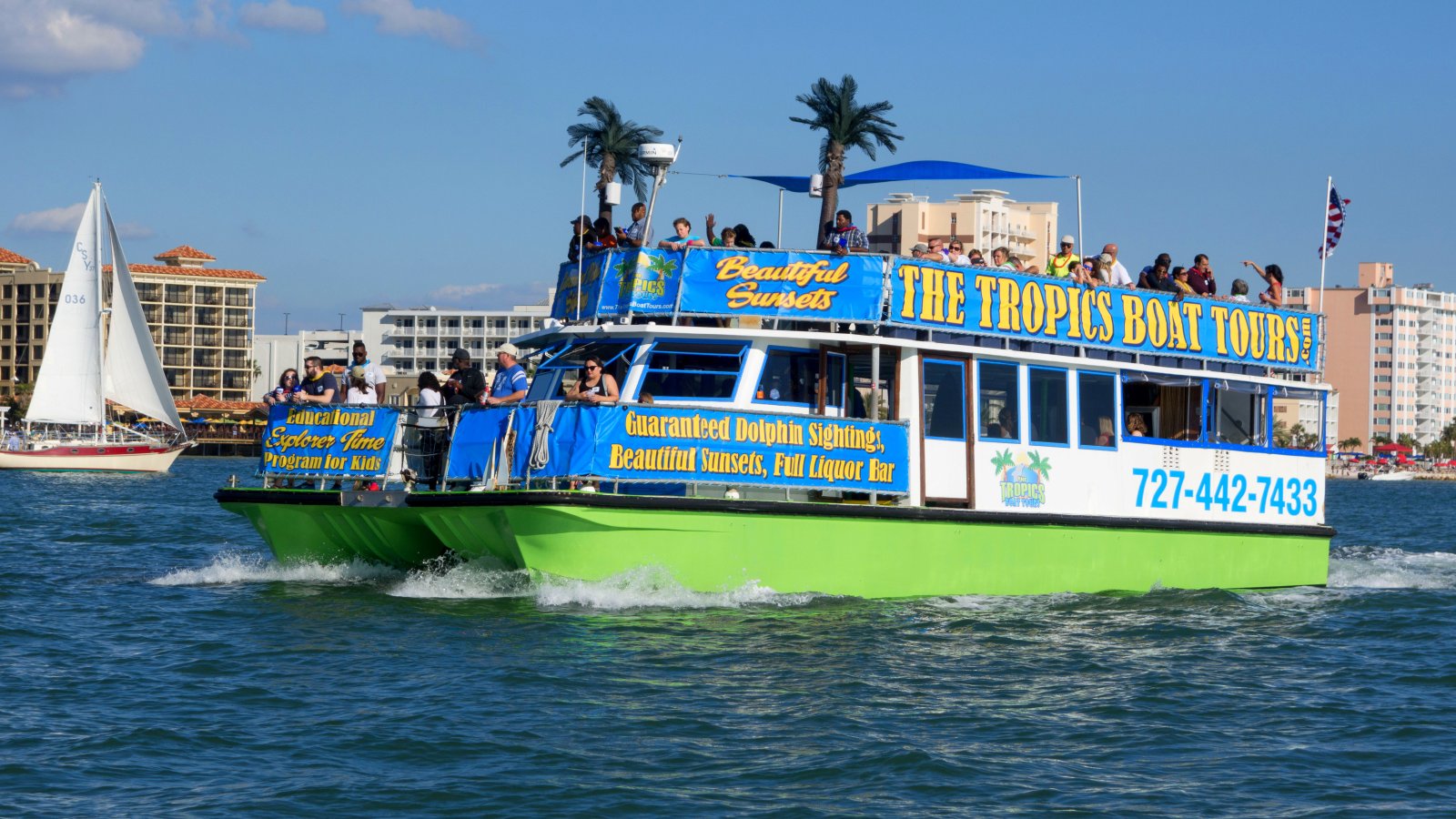
Salt spray and bright Florida sun ruin boat photos, but both are easy to plan for. This guide from The Tropics Boat Tours covers the camera gear for boat tours that earns its place in your bag, plus habits that keep it safe.
Pack these essentials:
A charged camera and light layers, per Clearwater operator guidance before you leave the dock
A polarizing filter to cut glare and reflections
A lens hood to block sun flare and stray spray
A camera strap, worn cross-body, never loose
A microfiber cloth and a dry bag for salt spray protection
Watch out: a loose strap over the rail is the fastest way to lose a camera to the Gulf. Keep it on your body at all times.
Smartphone gear for Clearwater boat tours
Most guests shoot on a phone. Bring a wrist lanyard or floating grip, since a bare phone over open water is gone the moment it slips. A microfiber cloth in a zip pocket matters more than any lens: salt film on the front element is the most common cause of hazy shots.
Before boarding, wipe the lens, turn on grid lines, and enable your phone's highest-resolution still mode. On iPhone, Live Photos let you scrub back when a dolphin surfaces late; on Android, check for a motion-photo or burst setting.
Protecting gear from salt spray and humidity
Salt isn't just water. When spray dries on a lens or sensor, it leaves crystalline residue that scatters light and washes out images. Wipe with a dry microfiber first, then a lightly dampened cloth, and never scrub a dry lens.
A clear UV or protection filter is cheaper to replace than a front element and takes the brunt of spray. Keep a spare battery and card in the dry bag. For long telephoto dolphin shots, a rain cover over the lens hood keeps spray off the barrel.
What to leave ashore
A tripod can be awkward on a rocking deck and a hazard to other guests, so handheld shooting with image stabilization is often the easier choice. Pack light enough to move along the rail when wildlife is spotted.
How to Take Photos From a Moving Boat: Settings and Stability
Learning how to take photos from a moving boat comes down to one rule: keep your shutter speed high. A moving vessel plus a moving subject means slow shutter speeds produce blur.
Steve Perry
Try these settings:
Shutter speed at 1/1000 second or faster for action shots.
Burst mode, fired in short bursts.
Continuous autofocus tracking.
Raise ISO until you hit that shutter speed, even in daylight.
Keep the horizon level and use the rule of thirds.
Stability matters as much as settings. Brace with three points of contact, feet spread and one hand on a rail. Handheld shooting is often practical on a rocking deck, and image stabilization helps in low light.
Here are the settings and habits that keep shots sharp on a rocking deck.
Setting or habit | What to do |
Shutter speed | 1/1000 second or faster for action shots |
Drive mode | Burst mode, fired in short bursts |
Autofocus | Continuous autofocus tracking |
ISO | Raise until you hit that shutter speed, even in daylight |
Composition | Keep the horizon level and use the rule of thirds |
Stability | Brace with three points of contact, feet spread, one hand on a rail |
Dolphin Cruise Photography Tips for Clearwater Waters
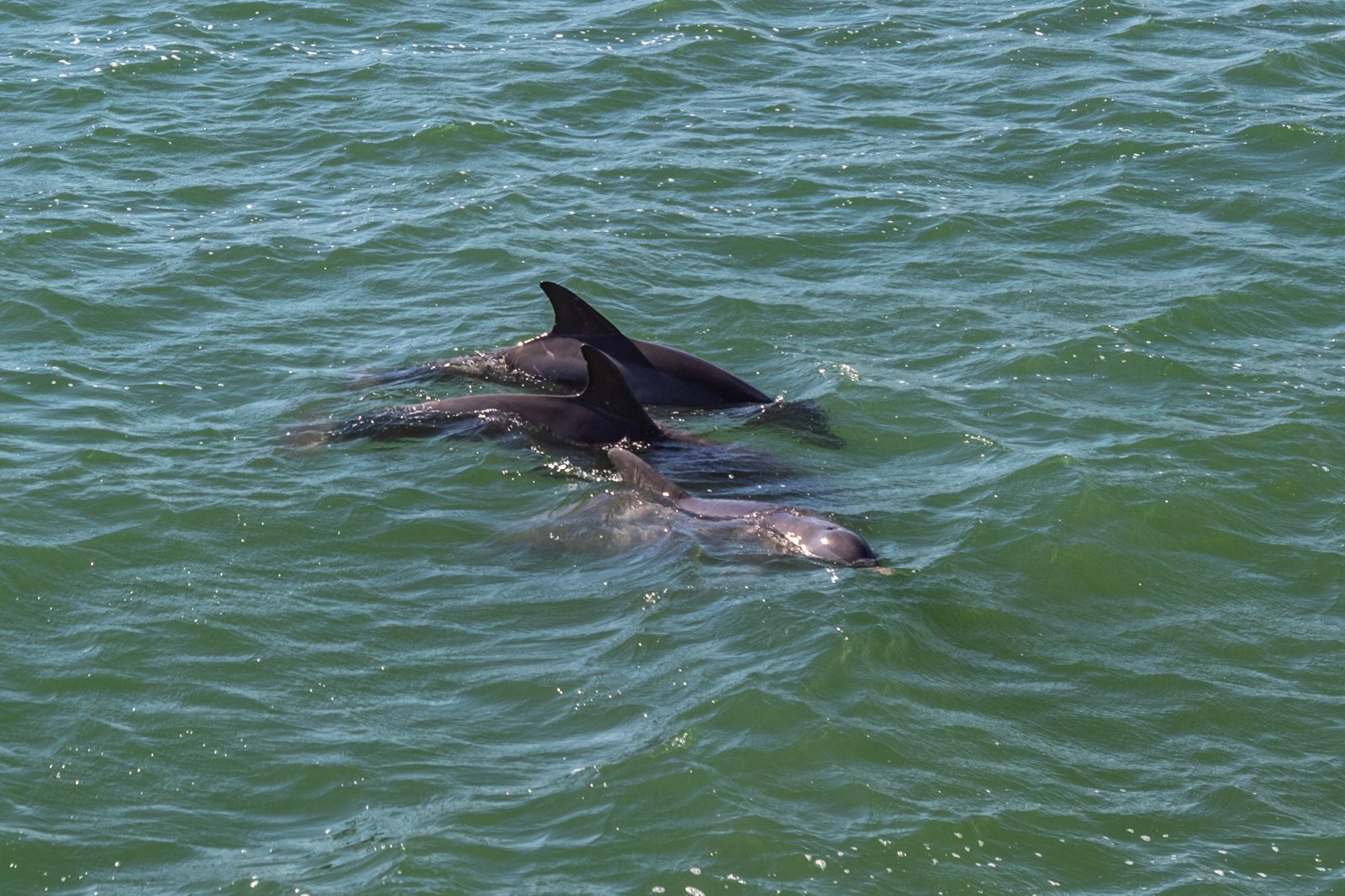
Dolphin cruise photography tips start with patience and distance. Wildlife photography ethics matter here: per Clearwater Marine Aquarium guidance, operators slow down and keep a safe distance when dolphins are present.

A few field-tested habits:
Watch the wake; dolphins often ride it.
Use a telephoto lens at 200mm or longer.
Track ahead of the dolphin, not at it.
Shoot in RAW for easier editing.
Keep focal length steady and let burst mode do the work.
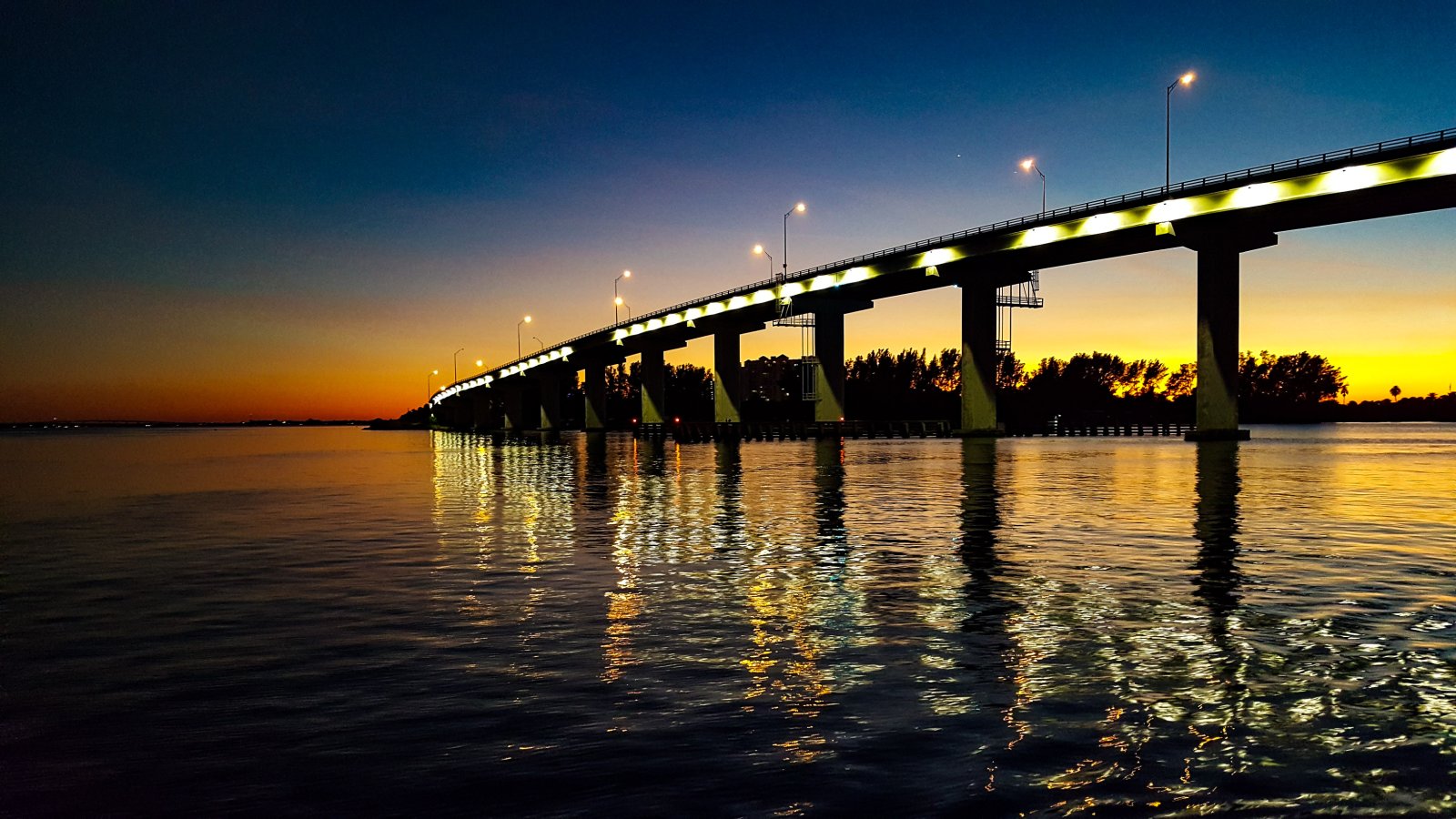
Want real examples? Browse our photos of dolphins in the wake and Gulf sunsets, then read where to see bottlenose dolphins in Tampa Bay. Ready to practice? Book a dolphin exploration tour and put these tips to work.
Sunset Photography Settings for Your Clearwater Boat Tour
Sunset photography settings on the water are about controlling exposure. The sky is far brighter than the sea, so meter for the sky and let the water fall darker, or use exposure compensation to balance both.
Settings that work:
Aperture around f/8 to f/11 for sharp depth of field
ISO 100 to keep noise low
White balance on cloudy or shade to warm the tones
A wide angle lens for the full horizon
A polarizing filter to deepen the sky
The green flash appears in the last seconds of sunset, so keep shooting until the sun is gone. Book a sunset celebration cruise to be in position, and read our Clearwater sunset cruise guide for more on timing.
Clearwater-specific sun angle and timing
Sunset views over the Gulf of Mexico mean the sun will often sit in your frame for much of the evening. The sun is in your frame, not behind you, so lens flare becomes a composition decision. A lens hood helps, but plan to shoot slightly off-axis, letting the sun sit at the edge of the frame, to keep contrast in the water.
As the sun drops toward the horizon over the Gulf, color can continue to develop after the sun touches the water. Keep shooting through civil twilight, when the sky may hold pink and orange while the water goes deep blue.
Editing haze and blue water after the cruise
Boat photos from Clearwater often come home looking flat: atmospheric haze over the Gulf, salt film on the lens, and a sky that blew out to white.
Shoot in RAW if your camera allows it, because RAW gives you far more room to recover a blown sky and correct white balance.
Watch out: aggressive dehaze and clarity sliders introduce halos around the horizon and dolphin fins, so zoom to 100 percent and check the edge between sky and water before you export.
Getting great shots on the water takes the right gear, fast settings, and a boat that puts you in the right spot.
Frequently Asked Questions
What camera settings work best for photographing dolphins from a boat?
Use a fast shutter speed of at least 1/1000 second to freeze dolphins as they surface and leap. Set your camera to continuous autofocus tracking and burst mode so you capture several frames in the second or two the dolphin is visible. Keep ISO on auto with a ceiling around 3200 so the camera can maintain that shutter speed in changing light. A telephoto lens of 200mm or more helps you fill the frame without getting too close, and shooting while the boat is stationary can make it easier to hold a steady frame.
How do you take sharp photos from a moving boat?
Brace yourself against a solid part of the boat, keep three points of contact, and hold the camera close to your body. Use a shutter speed of at least 1/500 second for general scenes and 1/1000 or faster for wildlife. Turn on image stabilization if your lens or phone has it, and shoot in burst mode to improve your odds of a sharp frame. Avoid the bow if the water is choppy, and shoot across the boat rather than straight ahead to reduce the apparent motion.
Should you use a phone or a camera for Clearwater boat tour photography?
Both work well. A phone is convenient, waterproof in many cases, and easy to keep in a pocket, but its small sensor struggles in low light and its digital zoom softens dolphin shots. A camera with a telephoto lens gives you cleaner wildlife images and more control over shutter speed and exposure. Many guests bring both: a phone for quick sunset and group shots, and a camera for dolphins and distant scenery. Whichever you choose, bring a fully charged battery and a way to secure the device to yourself.
Comments