

Where to See Bottlenose Dolphins in Tampa Bay
Updated: Nov 13
Last Updated: November 8, 2026
Quick Summary
Bottlenose dolphins live in Tampa Bay year-round, so you can see them on any visit rather than waiting for a season. The best way to see them is on a guided dolphin cruise from the marina that heads into the bay and out Clearwater Pass, where crews know the routes and feeding spots.
Sightings peak from spring through summer, when mothers and calves move into shallow bay waters.
Shore viewing from Pier 60 and the Clearwater shoreline is free but hit or miss.
The Dolphin Exploration Tour lasts 1 hour 30 minutes, with check-in 45 minutes before departure.
Feeding wild dolphins is illegal in the United States under the Marine Mammal Protection Act.
Morning and late afternoon are the most active windows for spotting dolphin fins.
Ready to see dolphins in Tampa Bay?
Join The Tropics Boat Tours for a Clearwater Beach dolphin cruise with guaranteed sightings.
Table of Contents
Bottlenose Dolphins in Tampa Bay: What You're Actually Watching
Bottlenose dolphins in Tampa Bay are not seasonal visitors passing through. They live here year-round, and the bay's shallow grass flats and warm coastal waters give them everything they need. The same question often comes up on dolphin cruises: are these the same dolphins every time? Mostly, yes.
Bottlenose dolphins are large, intelligent marine mammals that live in coastal waters worldwide and stay in Tampa Bay year-round. They hunt fish, mullet and pinfish in the bay's shallows.
Resident Dolphins, Not a Passing Pod
The dolphins you'll see off Clearwater Beach belong to a resident community, not a migrating group. Research from the Eckerd College Dolphin Project tracks population dynamics, ecology and acoustics of bottlenose dolphins in lower Tampa Bay, including Boca Ciega and coastal Gulf waters. In other words, the animals we watch on a Tuesday tour are often the same ones out there next month.
Some dolphins range wider than you'd expect. A 2025 study on bottlenose dolphin community structure used satellite-linked telemetry to document dolphins staying 18 to 145 km offshore over the West Florida Shelf for months at a time. That's not the Tampa Bay pattern, but it shows how far these animals can travel.
Dolphin or Porpoise? How to Tell
Dolphins have a curved dorsal fin, a beak-like snout and a lean body. Porpoises are shorter, stockier and have blunt faces. Tampa Bay's residents are common bottlenose dolphins, sometimes called Atlantic bottlenose dolphins. Watch the fin shape first, then the snout. That's usually enough.
Dolphin Tours Clearwater Beach Visitors Book Most Often
Most visitors see dolphins from a boat, and that's the right call. The best way to see dolphins in Clearwater Beach is on a guided dolphin cruise that leaves from the marina and heads into the bay and out Clearwater Pass. Crews know the routes, the tide patterns and where pods tend to feed.

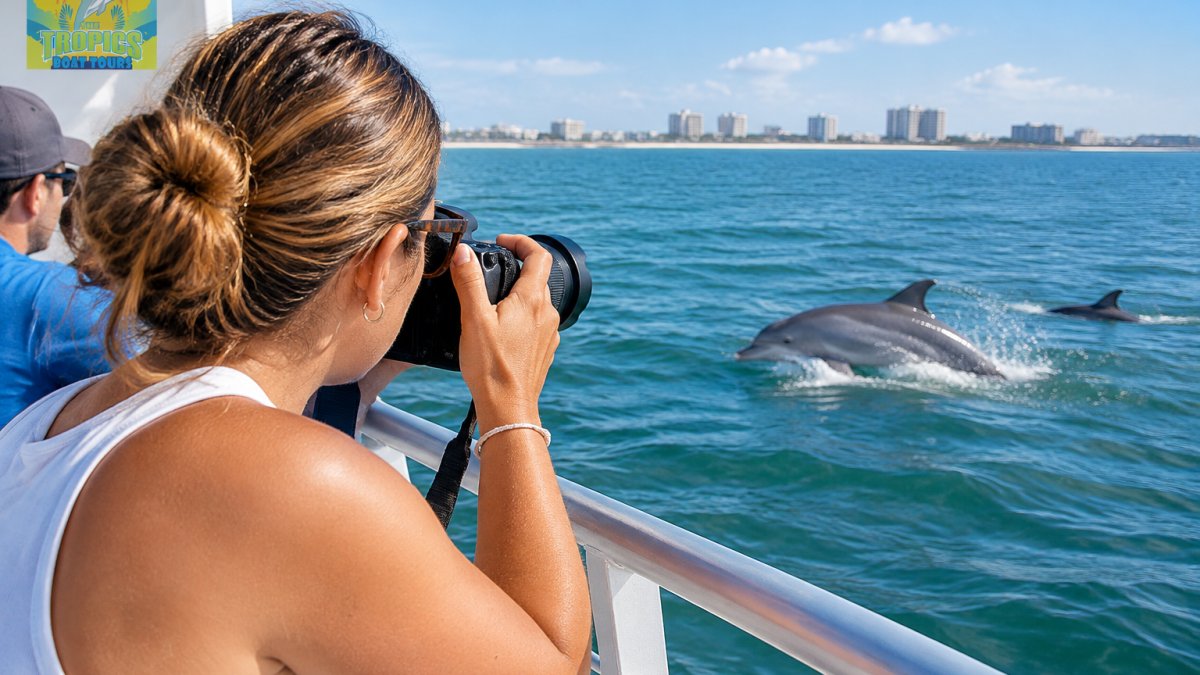
Passengers on a catamaran watch bottlenose dolphins surface near Clearwater Beach at sunset.
Shore-Based Viewing vs. Going Out on the Water
Shore viewing is free and easy. Pier 60, the beachfront and the Clearwater shoreline all give you a chance at a distant fin. But you're limited to what swims close to shore, and sightings are hit or miss.
A boat tour puts you in the bay habitat itself. You cover more water, get closer to pods, and have a captain reading the water in real time. For families with kids who want an actual sighting, the boat wins. For a quick, no-cost option, the beach works fine.
The Best Time to See Dolphins in Tampa Bay, Season by Season
Sightings happen all year, but the seasons change what you'll see and how you should plan. The best time to see dolphins in Tampa Bay runs from spring through summer, when mothers and calves move into shallow bay waters. The Tampa Bay Water Atlas notes that mothers and calves can be found in shallow bay waters during spring and summer.
Here's what each season generally looks like on the water:
Spring (March-May): Cow-calf pairs are often seen in the shallow grass flats and around the passes. Calves stay close to the mother, so viewing is often close but brief.
Summer (June-August): Warm water and long daylight hours, with dolphins feeding on mullet and pinfish. Afternoon thunderstorms are a common pattern along the Gulf Coast, so morning departures can help.
Fall (September-November): Dolphins range through the bay and out Clearwater Pass, and the water stays warm into October.
Winter (December-February): Dolphins remain in Tampa Bay year-round. Cold fronts can bring wind and choppy bay conditions, and pods may be more spread out.
Time of day matters as much as season. Morning and late afternoon tend to be the most active windows, and flat-light midday is harder for spotting fins. If you want the sunset version, our sunset celebration cruise is another option.
Summer afternoon storms can build quickly on the Gulf Coast, so a morning departure may suit your schedule better.
Dolphin Tour Duration Clearwater Beach: What the Clock Actually Looks Like
The Dolphin Exploration Tour lists a duration of 1 hour 30 minutes, with check-in 45 minutes before departure. Dolphin tour duration in Clearwater Beach usually breaks down into travel time, observation time and the return trip.
Phase | Typical Time | What Happens |
Boarding | 15 min | Check-in, safety talk, find your deck |
Travel out | 20-30 min | Cruise through the bay toward the pass |
Dolphin watching | 30-45 min | Slow down, watch pods, take photos |
Return trip | 20-30 min | Cruise back to the marina |
Total | ~2 hours | Plus buffer for wildlife delays |
Responsible Dolphin Watching: The Rules That Protect What You Came to See
Feeding wild dolphins is illegal in the United States. NOAA Fisheries says feeding and attempting to feed bottlenose dolphins violates regulations under the Marine Mammal Protection Act, and it changes their behavior in ways that hurt them. NOAA Fisheries guidance on bottlenose dolphins lays out the rules clearly.
The reason matters as much as the rule. Dolphins that learn to associate boats with food start approaching hulls and begging, which leads to boat strikes, entanglement in fishing gear, and calves that never learn to hunt. A fed dolphin is a dolphin in trouble, even when it looks friendly.
On board, that means a few simple habits:
Never toss food or bait to dolphins
Keep hands and arms inside the rail
Let the captain control the approach distance
Skip the dolphin swim facilities and stay with wild viewing
Safe viewing distance. Responsible wildlife viewing keeps a respectful distance from dolphins and limits time spent with any single animal or pod. Boats should not chase dolphins, cut across a pod's path, or box animals against the shore.
How to vet an operator before you book. Ask whether the crew briefs passengers on wildlife rules before departure and whether the captain will end a sighting rather than crowd a pod. Be cautious of tours that promise close encounters without mentioning distance guidance.
Our crew follows these rules on every trip. You can read more about our Ocean Allies certification and practices if responsible operation matters to you. It should.
Wild dolphins cannot be guaranteed, so be cautious of promises of guaranteed encounters or swim-with-dolphin add-ons, which can conflict with distance guidance.
Book Your Clearwater Beach Dolphin Tour
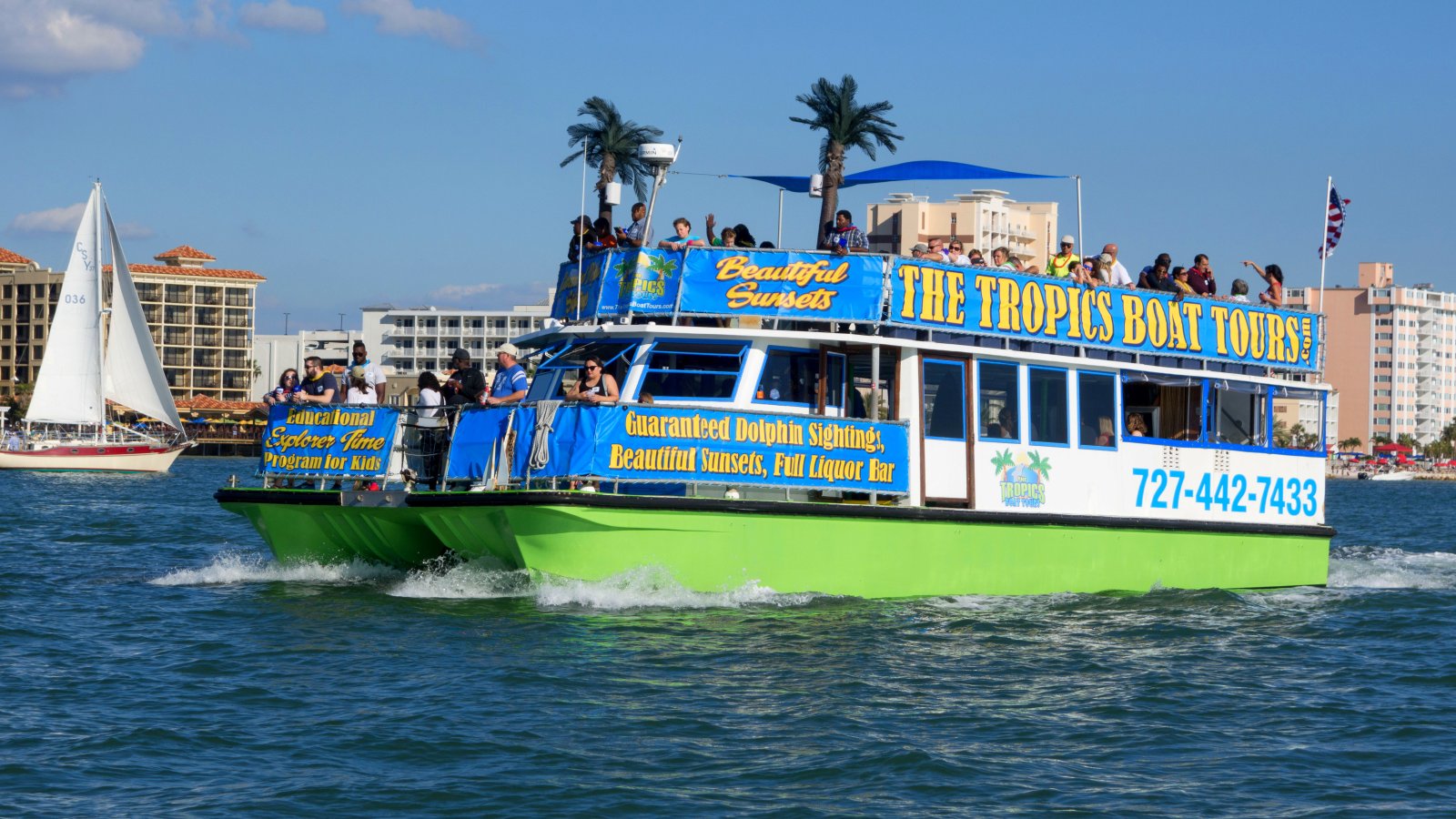
No operator can guarantee a wild animal shows up on command. Our dolphin exploration tour runs on a 126-passenger double-decker catamaran, the largest dolphin boat in the marina, with upper and lower deck views and a premium bar on board.
Traveling with a group? Our private charters are an option for group outings. And if you're comparing options across Clearwater Beach, FL, start with the dolphin watching cruises page to see what's available before you book.
The difference between a good dolphin tour and a forgettable one comes down to the boat, the crew and the route. We built ours around all three. Get started with The Tropics Boat Tours and see resident bottlenose dolphins up close on the Gulf Coast.
Frequently Asked Questions
Are the bottlenose dolphins in Tampa Bay wild?
Yes. Every bottlenose dolphin you see in Tampa Bay is a wild animal, not a trained or captive one. Eckerd College's dolphin project tracks population dynamics and behavior in lower Tampa Bay, Boca Ciega and coastal Gulf waters. That means sightings depend on where the animals choose to feed and travel that day.
What is the best time to see dolphins in Tampa Bay?
Spring and summer are the strongest window. Mothers and calves are often found in shallow bay waters during spring and summer. Cooler months still produce sightings, but the animals range more widely. Time of day matters as much as season: dolphins feed actively on moving tides, so morning and late-afternoon departures often catch more surface activity than the flat middle of the day.
How long are dolphin tours from Clearwater Beach?
Most dolphin tours from Clearwater Beach run about two hours dock to dock. The Dolphin Exploration Tour lists a duration of 1 hour 30 minutes, with check-in 45 minutes before departure. Ask before you book whether a quoted duration includes boarding time.
Can you swim with wild dolphins near Tampa Bay?
No. Feeding or attempting to feed bottlenose dolphins is illegal under regulations implementing the Marine Mammal Protection Act, and Feeding changes dolphin behavior and can harm them. Swimming with wild dolphins in Tampa Bay is not permitted, and operators that advertise encounters should be read carefully. Responsible dolphin watching means keeping distance, letting the animals approach the boat rather than chasing them, and never luring them with food.
Comments